A Gentle 10-Minute Morning Stretch Routine for Everyone
Start your day with a simple, calming routine that loosens your body, wakes up your focus, and leaves you ready for whatever comes next.
A gentle 10-minute morning stretch routine can help you feel more mobile, comfortable, and awake before the day gets busy. You do not need flexibility, special equipment, or a long workout: just ten minutes, a little space, and movements that feel easy on your body.
The short version
- Move slowly through six simple stretches, spending about a minute on each side.
- Keep your breathing smooth and comfortable, never holding your breath.
- Use a smaller range of motion whenever you need more support.
Why Stretch in the Morning?
Your body often feels stiff after sleeping, especially in the neck, shoulders, hips, and hamstrings. A brief mobility routine gives those areas a chance to move gently and may make it easier to settle into your day. It can also serve as a quiet transition between rest and activity, without the pressure of an intense workout.
The best morning stretch is not the most ambitious one. It is the routine you can repeat consistently without rushing, straining, or dreading it. Start with movements that feel natural and leave enough energy to move through your day. If you are still tired, a slow routine can be refreshing without leaving you overstimulated.
You can perform this sequence after waking up, before showering, or while your coffee brews. Stretching does not require a particular outfit or location, although a flat, non-slip surface is helpful. Keep your phone out of reach if you tend to rush through the routine, and give yourself permission to shorten it when time is limited.
Your 10-Minute Full-Body Routine
Set a timer for ten minutes and move at a comfortable pace. The suggested timings below are guides, not rules: a slower routine may take a little longer, while a shorter version is still worthwhile. Keep a tall but relaxed posture, soften your knees, and avoid bouncing or forcing a range of motion.
- Shoulder and neck release, 1 minute. Stand with your feet comfortably apart and let your arms hang heavy. Slowly tilt your right ear toward your right shoulder, keeping the left shoulder relaxed. Hold for three comfortable breaths, then return to center. Repeat on the left side. Next, bring your chin slightly toward your chest, feeling the back of your neck lengthen, and roll your shoulders backward a few times.
- Standing side bend, 1 minute. Reach both arms overhead and interlace your fingers if that feels natural. Lean gently to the right, keeping your ribs stacked over your pelvis and both feet grounded. Stay for about 30 seconds, breathing easily, then switch sides. If your arms feel tight, keep them lower and use one hand at a time.
- Wall-supported chest stretch, 1 minute. Face a wall and place one palm on it at about shoulder height. Step your foot back and turn your body gently away until you feel a mild stretch across the front of your shoulder. Keep your neck long and your ribs down. Hold for 30 seconds, change arms, and repeat. Move your hand higher or lower to find a comfortable angle.
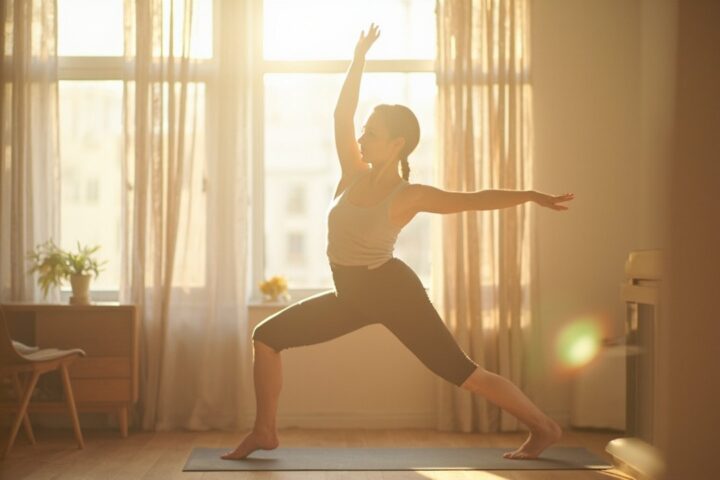
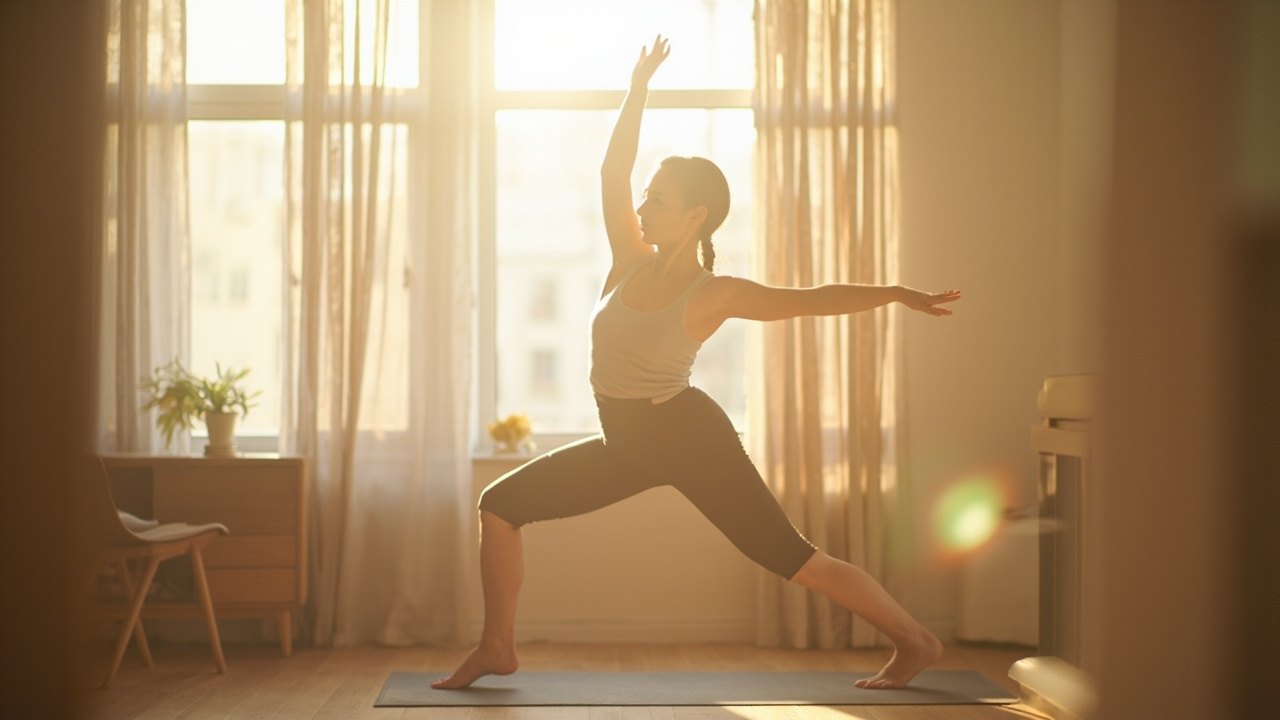
- Hip flexor stretch, 1 minute per side. Take a long step forward with your right foot and place both hands on your front thigh for support. Keep your back leg straight without locking the knee, tuck your pelvis slightly under, and bend the front knee only as much as needed. Hold for 30 seconds, then switch sides. If kneeling is more comfortable, bring the rear knee down onto a folded towel or mat.
- Hamstring stretch, 1 minute per side. Place your right heel forward with the toes up, keeping that foot grounded. Soften both knees and hinge forward from your hips until you feel a mild pull behind the thigh. Rest your hands on your thighs, a chair, or your leg. Hold for 30 seconds, return to standing, and repeat on the other side. A slight bend in the stretched knee is fine.
- Supported forward fold, 1 minute. Stand with your feet hip-width apart and soften your knees. Fold forward from the hips and let your head, arms, and upper body relax. Keep your neck free, especially if you have any neck discomfort. Hold for 20 to 30 seconds, then slowly roll up to standing. Bend your knees more if your lower back feels sensitive.
- Easy movement finish, 30 seconds. Rise onto the balls of your feet, lower your heels, and gently roll your wrists and ankles. Take three slow breaths with your arms by your sides. End by noticing how your body feels rather than judging whether you stretched enough.
If ten minutes feels challenging, complete the first three movements and finish with a few standing breaths. A shorter routine that you enjoy is more useful than a perfect routine you avoid.
How to Breathe Without Overcomplicating It
Breathe through your nose or mouth, whichever feels easiest. As you move into a stretch, inhale slowly through your nose; as you settle into the position, exhale gently through your mouth. The goal is not to take especially deep breaths, but to keep breathing steadily so your muscles can relax.
A useful pattern is to inhale for a count of four and exhale for a count of six, but counts are not required. If counting makes you tense, simply let your exhale be a little longer than your inhale. Avoid holding your breath, forcing your shoulders upward, or trying to inhale forcefully into a tight stretch.
Stay alert to the sensations in your body. A gentle pull, warmth, or mild tension is usually appropriate for a routine like this. Pinching, sharp pain, numbness, or a sudden “electric” sensation is a signal to come out of the stretch immediately.
Ways to Modify the Routine
There is no single correct version of a morning routine. Adjust the positions to match your current flexibility, energy, and surroundings. The movement should feel like a comfortable invitation rather than a test.
- For less mobility: Sit in a sturdy chair for the neck, shoulder, chest, and hamstring movements. Keep the range of motion small, use the chair back for support, and skip any position that causes discomfort.
- For more balance: Keep one hand on a wall or the back of a chair for the side bend and hip stretch. Use the support to steady yourself rather than pulling deeper into the position.
- For knee or back sensitivity: Bend your knees, reduce your stance, or choose seated stretches. Keep the movement easy and stop if pain increases.
- For a quiet or shared space: Use seated shoulder rolls, a gentle seated side bend, and ankle circles. A smaller sequence can still provide a calm start.
- For extra time: Repeat the hip flexor or hamstring stretch on each side, or add slow shoulder circles. Add time only if the routine still feels restorative rather than tiring.
Do not compare your range of motion with anyone else. Flexibility changes from day to day, and your best position today may be different from yesterday. Focus on smooth movement, controlled breathing, and a clear, comfortable stopping point.
When to Pause or Stop
Most discomfort during a gentle stretch should be mild and temporary. Stop moving if you feel sharp pain, joint instability, dizziness, numbness, tingling, or a sudden change in sensation. Do not push through a stretch that makes you hold your breath or brace your muscles.
If you feel pain during the routine, return to a neutral position and assess what happened. You can try a smaller version of the movement or skip it altogether. Persistent pain, recent injury, or unusual symptoms deserve individual attention rather than a standard routine. Check with a doctor or qualified professional if you have a health condition, pain, or concerns about exercising.
How to Make It a Habit
Attach the routine to something you already do. Stretch while your coffee brews, after brushing your teeth, or before opening your laptop. A clear trigger makes it easier to remember, especially on mornings when motivation is low.
Prepare the space the night before. Place a mat or folded towel where you will stretch, set your alarm for ten minutes, and keep the sequence visible on a note if that helps. Starting with the same order each time will reduce the mental effort of deciding what to do.
Try to make the routine feel like a reward, not a chore. Play calm music, keep water nearby, or choose a comfortable time of day. On busy mornings, use a three-minute version so the habit survives schedule changes.
You can also track how you feel rather than how flexible you are. Notice whether your shoulders feel less tense, whether your breathing is easier, or whether you begin the day with more space in your movements. Those small, repeatable benefits are often more motivating than chasing a particular range of motion.
Frequently asked questions
Do I need to stretch every morning?
No. A short routine can be helpful, but consistency matters less than choosing a pattern that fits your life. Many people find that stretching on most mornings feels more useful than an occasional long session.
Can I stretch without a mat or equipment?
Yes. A little open floor space is enough, and a wall or sturdy chair can help with balance and support. A towel is useful only if you want to cushion your knees; none of these movements requires specialized equipment.
What if I am not very flexible?
Begin with a small range of motion and keep your knees soft. The aim is comfortable movement, not touching your toes or matching someone else’s position. Over time, regular gentle practice may make the movements feel easier, but there is no need to force them.
A morning routine works best when it feels like a supportive beginning, not a performance. Ten unhurried minutes, adjusted to your body, can become a simple way to move, breathe, and arrive in your day.