How to Eat Tinned Fish Well and Make It Part of Your Routine
Sardines, mackerel, anchovies, and tuna are affordable, flavorful, and easy to use—here is how to choose, serve, and store them.
Tinned fish is having a moment because it combines bold flavor, convenience, and versatility with a shelf-stable format that suits both quick lunches and thoughtful cooking. The best tin depends on what you want from it: firm fish for salads, rich fillets for plating, or small fish for eating straight from the can.
The short version
- Choose based on freshness, packing liquid, ingredients, and the dish you plan to make.
- Drain or rinse when needed, then season simply with acid, herbs, oil, and spices.
- Store opened tins promptly in a sealed container in the refrigerator and use them within a few days.
Why Tinned Fish Keeps Appearing on the Table
For years, tinned fish lived mainly in pantry staples and sandwich fillings. It has become more visible as people look for convenient foods that still taste satisfying and offer some preparation flexibility. A tin can be pantry-ready, but the serving ideas are anything but limited.
Different fish bring different qualities to the table. Sardines are small, rich, and meaty. Mackerel often has a pronounced oily flavor that stands up to strong seasoning. Anchovies are intensely savory and usually used in smaller amounts. Tuna is mild and substantial, making it a familiar choice for salads, sandwiches, and grain bowls.
There is also practical appeal in buying what you need for one meal or a few. Many tins come in single-serving sizes, while larger tins can be divided into several servings. Shelf stability makes tinned fish easy to keep on hand without planning every grocery trip around fresh fish.
How to Choose a Tin
Start by deciding how you will eat it. Whole small fish are good for straight-from-the-tin snacks or casual plates. Fillets are convenient when you want to add larger pieces to a salad or dinner. Flaked and chunked tuna are useful when texture matters less than ease.
Then read the label. Look for a clear product name, an ingredient list, and a straightforward packing liquid. Fish packed in water has a cleaner flavor and lighter texture, while fish packed in oil tends to feel richer. Olive oil may offer a more mellow flavor than vegetable oil, though the choice depends on the brand and your preference.
Some tins contain added salt, so check the nutrition label if sodium is a concern. Others include ingredients such as soy sauce, sugar, spices, or hydrolyzed vegetable protein. These can be convenient, but they also change the final flavor. For the most control, choose a simple product and season it yourself.
It is also worth considering the can itself. Look for intact seams, clean surfaces, and packaging that has not been deeply dented or distorted. Once opened, inspect the fish and packing liquid before eating. If the contents smell unusually sour or the can is badly damaged, do not eat them.
Start With Sardines for a Rich, Straightforward Flavor
Sardines are the most direct introduction to tinned fish because they can be eaten with little fuss. Their bones and skin are commonly eaten, and their texture is softer and more delicate than that of larger fish. For someone who enjoys strong flavor, they may be especially satisfying.
A simple plate needs very little. Drain excess liquid, arrange the sardines on toast or crackers, and add lemon juice, a drizzle of extra-virgin olive oil, and freshly ground black pepper. Finely sliced shallot or a small spoonful of mustard can add sharpness and depth.
For a more substantial meal, combine one tin with boiled or canned beans, chopped greens, and a grain such as rice or quinoa. A dressing of lemon juice, olive oil, mustard, and black pepper pulls the ingredients together. The sardines may be broken into the mixture, which helps distribute their rich flavor.
Sardines also work well with warm sides. Arrange them over roasted vegetables, add a spoonful of yogurt or soft cheese, and finish with herbs and lemon. Their flavor pairs naturally with tomatoes, potatoes, olives, cucumber, and lightly bitter greens.
Use Mackerel, Tuna, and Anchovies for Different Jobs
Mackerel has a strong, oily flavor that makes it useful for dishes with assertive seasoning. Drain the fillets and break them into large pieces for a salad with fennel, red onion, arugula, or herbs. A sharp vinaigrette helps balance the richness. Mackerel can also be seared briefly in a hot pan after draining, although it will not behave like a fresh fillet.
Tuna is the most adaptable of the group. Plain tuna in water can be folded into mayonnaise for a sandwich, added to a bowl of beans, or mixed with chopped celery, pickles, and onion for a quick salad. Tuna packed in oil can provide a richer base for spreads and grain bowls, particularly when the oil is mild and the added ingredients are simple.
Anchovies deserve a place in the kitchen even if they never appear alone on a plate. They are commonly chopped and mixed into sauces for pasta, pizza, and vegetables. A classic combination is anchovy, garlic, olive oil, and chili, finished with parsley or another fresh herb. Because they are salty and concentrated, start with a small amount and taste before adding more.
Build a Better Tinned Fish Plate
The easiest way to make tinned fish taste intentional is to build a plate around contrast. Rich fish benefits from acidity, crunch, fresh herbs, and something mild. Before serving, taste the fish and decide whether the dish needs lemon, vinegar, pickles, capers, or a sharper dressing.
Try one of these combinations:
- Sardines, rye crackers, sharp cheddar, and pickled onions: the crackers provide crunch, the cheese adds richness, and the onions cut through the oil.
- Tuna, cucumber, egg, and greens: a mustard-and-mayonnaise dressing turns the ingredients into a dependable tuna salad.
- Anchovies, tomato, mozzarella, and basil: the anchovies act as a concentrated savory ingredient rather than the centerpiece.
- Mackerel, potatoes, olives, and dill: warm potatoes and sharp olives balance the fish’s strong flavor.
For a lunch that feels complete, add a grain, a vegetable, and a dressing. Quinoa, rice, couscous, or chickpeas work well, while cucumber, cabbage, roasted peppers, or leafy greens keep the plate fresh. Season in layers: first the fish, then the dressing, and finally the herbs and spices.
Make a Snack Board or Pantry Plate
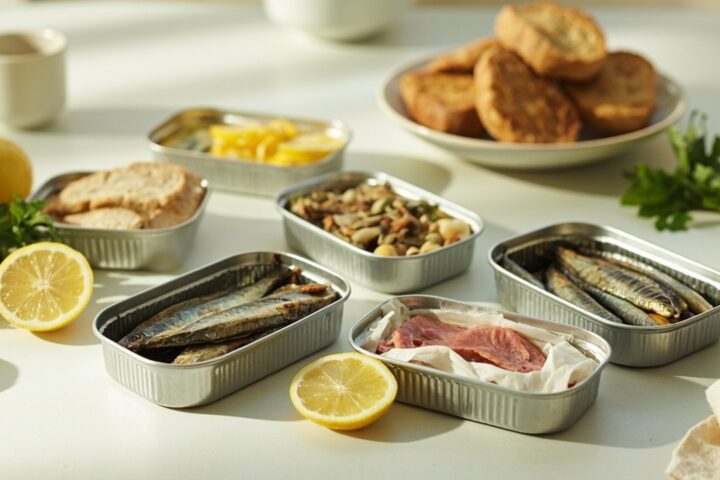
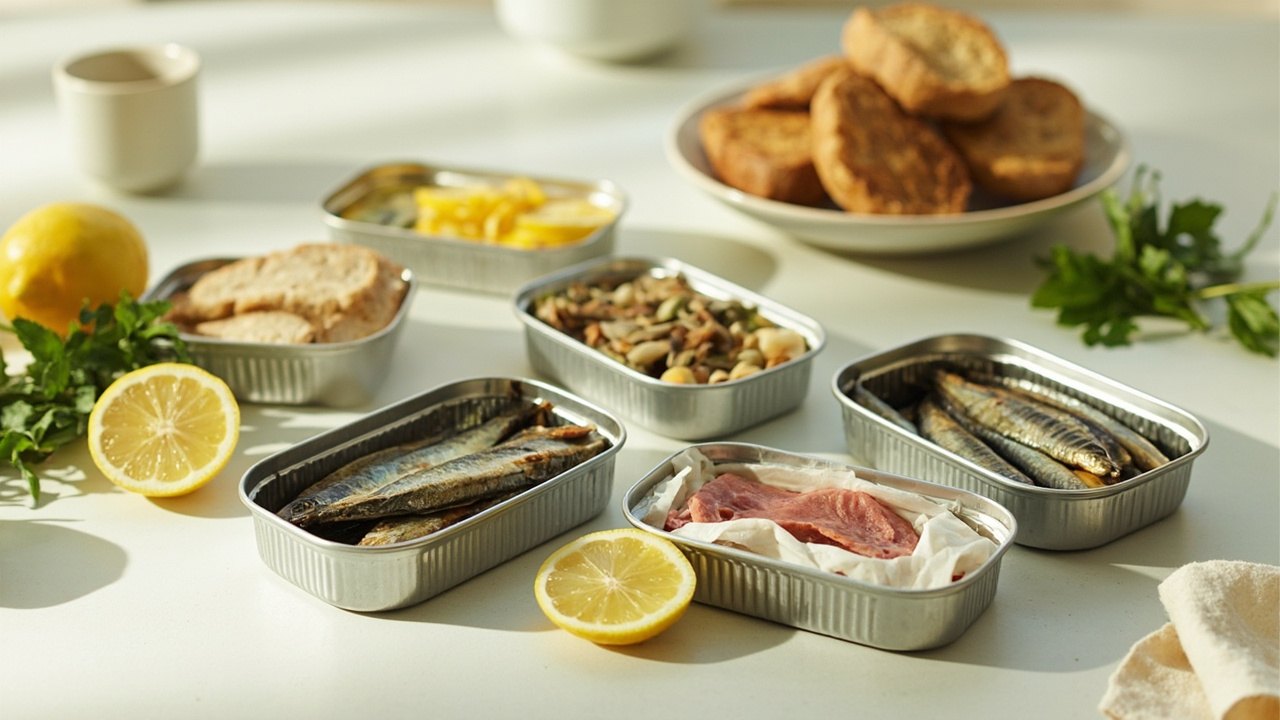
A snack board is an easy way to sample several kinds of tinned fish without treating them as the main event. Put opened tins in small bowls so guests can try a little of each. Keep the presentation neat by serving the fish with the portions and garnishes separate.
Choose two or three textures alongside the fish. Crackers, sliced bread, or toasted flatbread provide a sturdy base. Add something crisp, such as cucumber ribbons, fennel, celery, or radishes, and something bright, such as lemon wedges, cornichons, or olives.
Cheese is another useful addition. Mild cheddar, mozzarella, feta, or a firm goat cheese all work in different ways. A mound of grain or chopped salad can make the spread more meal-like, while a simple herb mayonnaise or mustard sauce gives diners something to add by taste.
Keep each variety in its own dish rather than combining strongly flavored fish on one platter. Label them if the selection includes tuna, sardines, mackerel, and anchovies, or simply tell guests what is available. A board built around a few good ingredients will feel generous without requiring elaborate preparation.
Store Opened Tins Carefully
Do not keep fish in an open, rusted, or bulging can, and do not transfer hot food into one. For short-term storage, move the fish to a clean airtight container and refrigerate it promptly. Keeping the fish submerged in enough packing liquid or oil can help limit exposure to air.
A glass container with a tight-fitting lid works well for larger pieces. For smaller fish, a small covered dish is enough. Label the container with the type of fish and the day it was opened, especially if you batch several kinds at once.
As a general rule, use refrigerated tinned fish within a few days rather than relying on the can’s original shelf life. If you cannot finish it in that window, freeze it in a sealed container or divide it into portions. Thaw it in the refrigerator, not on the counter, and use it soon after thawing.
Frequently asked questions
Should I rinse tinned fish before eating it?
Not always. If the packing liquid is salty, bitter, or strongly flavored, draining and rinsing can make the fish taste cleaner and more balanced. Plain fish packed in water or oil usually needs only draining, and rinsing can reduce the oil you may want to keep.
Is it okay to eat sardines with their bones and skin?
Yes, both are commonly eaten and are soft enough to eat with the flesh. The bones provide calcium, while the skin contributes flavor and texture. Simply remove any unusually large pieces if that is your preference.
Can I use tinned fish instead of fresh fish in a recipe?
You can, but adjust the cooking method and seasoning. Tinned fish is already cooked, so it usually only needs warming, and it often needs less salt than fresh fish. Add it near the end of a dish, then taste before adding more seasoning.
Used with a little attention rather than a complicated recipe, tinned fish can be the most useful thing in the pantry. Keep a few tins on hand, choose one that suits the meal, and let lemon, herbs, good oil, and crunchy sides do much of the work.