How to Build a Capsule Wardrobe That Still Feels Like You
A smaller wardrobe doesn't have to mean a blander one — here's how to audit your clothes, pick a palette, and keep the pieces that actually sound like you.
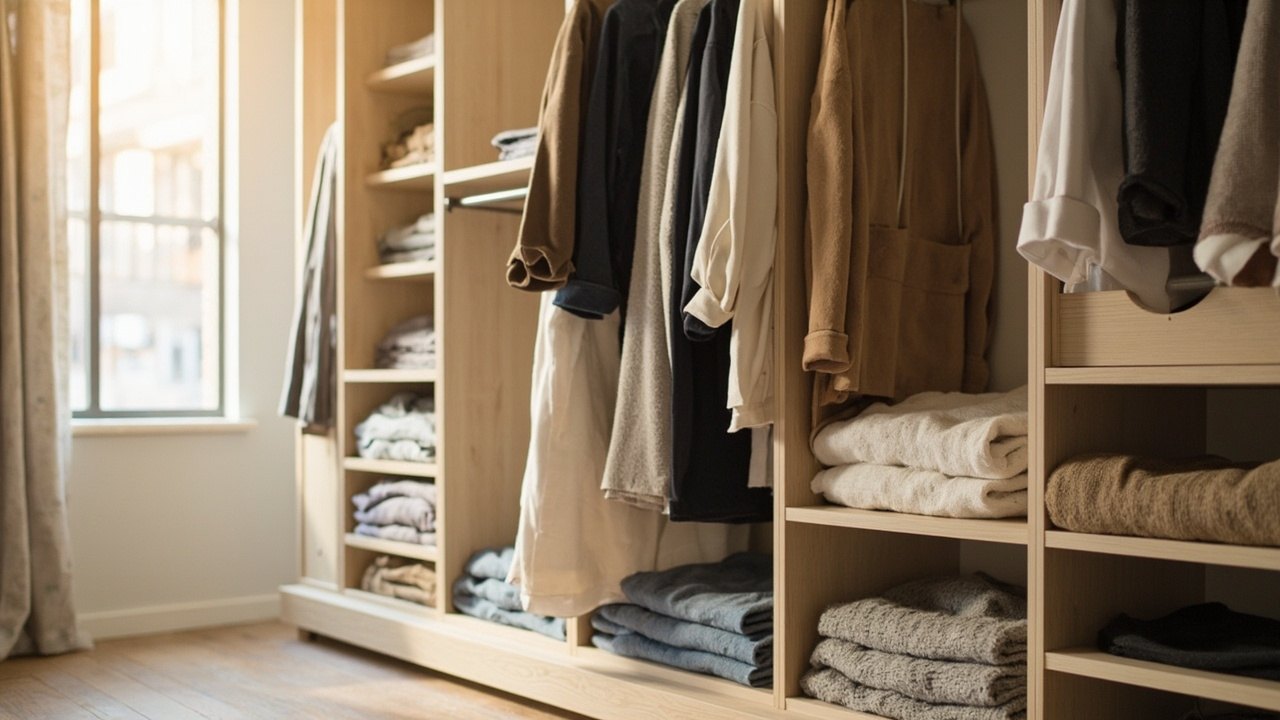
A capsule wardrobe works best when it’s built around your actual life — your climate, your job, your habits — rather than an idealized version of it. The trick is to do the unglamorous work first: sorting what you own, choosing a colour palette, and picking a handful of pieces that genuinely work together. Then you add back the odd, delightful things that make the whole thing feel like yours.
The short version
- Audit what you already own, and keep only what fits, works and earns regular wear.
- Choose a tight colour palette so nearly every item pairs with nearly every other.
- Build a small set of core pieces, then spend your remaining attention on a few personality items.
Start With an Honest Closet Audit
Closet audits get a bad reputation because they turn into an exercise in self-criticism. Treat yours as a practical inventory instead: you are learning what you actually reach for, what you actually wear, and where the real gaps are.
- Empty one section at a time. Sort every item into three piles: keep, mend, and let go. Working section by section keeps the job from feeling overwhelming.
- Try things on, don’t just hold them up. Pair a top with the trousers and shoes you would actually wear with it, and watch for fit problems, itchiness or awkward proportions.
- Apply the wear test. If you haven’t reached for a piece in months and wouldn’t buy it again today, it probably belongs in the let-go pile.
- Keep two notes as you go: the pieces you love and wear often, and the categories where you own almost nothing. That second note becomes your shopping map later.
- Look for hidden duplicates. Three tops doing the same job, or jeans in three similar washes, are worth consolidating down to the best-fitting one.
The goal isn’t a perfectly empty closet. It’s a clear picture of your personal uniform — the silhouettes, colours and fits that already look good on you.
Choose a Palette You Will Actually Wear
A capsule only works if almost everything in it goes with everything else, and the fastest way to guarantee that is to limit your colours before you limit your pieces. Build the palette around two neutrals you love wearing and one or two accents.
- Warm neutrals: oatmeal, camel, cream, soft grey, chocolate, black.
- Cool neutrals: white, ecru, slate, navy, charcoal, denim blue.
- Accents: a colour you’d happily wear head to toe, such as rust, olive, burgundy, mustard or deep teal.
Check any palette against real life rather than a mood board. Consider the colours you wear most, the ones that flatter your skin tone, and how they behave in actual fabrics — some shades fade, some pill, and some look quite different under indoor light.
Prints fit into a palette too, provided they share its colour family. A striped shirt in your navy and cream will look deliberate beside a plain navy layer; the same shirt in three unrelated colours will look accidental.
Pick Core Pieces That Work Hardest
After the audit, what’s left should include a small backbone of items that do most of the styling for you. Look for pieces that are comfortable, fit well, and can be dressed up or down.
- A pair of trousers or jeans in your best-fitting wash, cut to a length that works with your shoes.
- A simple knit — a fine-gauge sweater or a soft cardigan — in one of your neutrals.
- A shirt or blouse with a clean line, in a fabric you can wear open over a tee.
- One easy bottom or dress that handles both casual plans and dressed-up ones.
- A layer for bad weather: a structured jacket, a chore coat or a wool coat.
- One pair of shoes and one bag that work with nearly every outfit.
Test each candidate by asking whether it can be styled at least three ways. A plain tee works with jeans and a blazer, with a skirt and a cardigan, and under a coat on a weekend. If a piece only has one outfit, it’s probably an accessory rather than a core.
Pay attention to fit above all else. A capsule built on badly fitting basics will still look wrong, and it will send you back to the shops. Hemming, alterations and tailoring turn a garment from merely adequate into genuinely good, and cost less than replacing it.
Add Personality on Purpose
This is where many capsule guides go wrong: they strip out everything distinctive and leave you in beige. The point of a capsule is fewer, better decisions — not the disappearance of your taste.
- One statement layer: a jacket in a colour you love, or a piece with an interesting texture.
- A few accessories with character: a scarf, a hat, a belt, jewellery you actually put on.
- At least one print or pattern, chosen to sit inside your palette.
- Textured fabrics: corduroy, denim, brushed cotton, wool, leather.
- Small deliberate deviations: a colourful pair of socks, a bag that doesn’t quite match.
Keep the ratio sensible. A modest amount of distinctive pieces, added deliberately, reads as intentional style; the same amount scattered at random reads as clutter. When you buy something loud, give it a job and wear it often.
Include the clothes you feel best in, even when they aren’t the most versatile. A dress you love but keep hemming, or a shirt you reach for on a good day, is worth tailoring rather than dropping.
Let the Wardrobe Change With the Seasons
A capsule wardrobe isn’t a permanent one. The core stays put; a small rotation moves in and out as the weather and your calendar shift.
- Keep year-round pieces within reach: your core knit, your trousers, your shoes, your everyday bag.
- Store seasonal pieces properly — clean, folded or on good hangers — so they’re ready when you want them.
- Swap in a handful of warm-weather or cold-weather items rather than an entirely new set.
- Review what you didn’t wear last season before buying again. That gap is usually a habit, not a shortage.
Swap at natural breakpoints, such as the end of a warm spell or the moment you notice yourself hauling the same coat in July. The timing doesn’t need to be exact; the useful thing is that it happens a couple of times a year.
Seasonal rotation also keeps the capsule honest. Clothes that sat unworn through two summers have already told you something, and re-reading that note saves you from buying a third version of the same mistake.
Shop Less, but Shop Better
Once the audit and the palette are done, shopping becomes a short, specific errand rather than an open-ended afternoon. You’re filling documented gaps, not browsing.
- Write the list before you go, and stick to it. Each item should name the category, the colour and the outfit it belongs to.
- Check every candidate against what you already own. New pieces must work with your current wardrobe, not with a plan to own more later.
- Try things on and move in them. Comfort matters more than the tag.
- Look at the construction: seams, hems, buttons, zips, and how the fabric drapes. Something flimsy in the hand rarely improves with wear.
- For anything above your usual price, wait a week and ask whether the gap is real or whether you simply want a change of scenery.
Spend more on the pieces you wear most and less on the experimental ones. A coat, a good knit and a pair of shoes that holds up earn their cost many times over; a trend piece you won’t wear next season doesn’t, however good it looked in the photograph.
Buying fewer also gives you room to buy better. Fewer decisions, made with more care, is the entire idea.
Frequently asked questions
How many pieces should a capsule wardrobe have?
There’s no magic number, and anyone promising one is selling something. The practical test is whether you can get dressed without wondering — if a smaller group of pieces genuinely covers your week, that’s a capsule. If you’re still hunting for something basic every morning, keep going until the gaps close.
Do I have to give up my favorite clothes?
No. Favourites belong in a capsule, especially the ones you reach for instinctively. If a piece is well loved but doesn’t pair easily, treat it as an accent and build the rest of the wardrobe around it, rather than forcing it to conform to someone else’s palette.
What if I don’t like wearing the same colours?
Then narrow the palette rather than abandoning it — two neutrals you enjoy plus a single accent will still give you plenty of combinations. A capsule that feels like a uniform will stop being worn, and a wardrobe you never wear isn’t saving you anything.
A capsule wardrobe is less about owning less than owning things you chose on purpose. Do the audit, set the palette, build the backbone, then let the interesting pieces do what they were bought to do: make getting dressed feel easy and unmistakably yours.