Satisfying Snack Ideas for Busy Afternoons That Keep You Going
Build better afternoon snacks with simple combinations of protein, fiber, and flavor, plus practical ideas for eating at your desk or eating ahead.
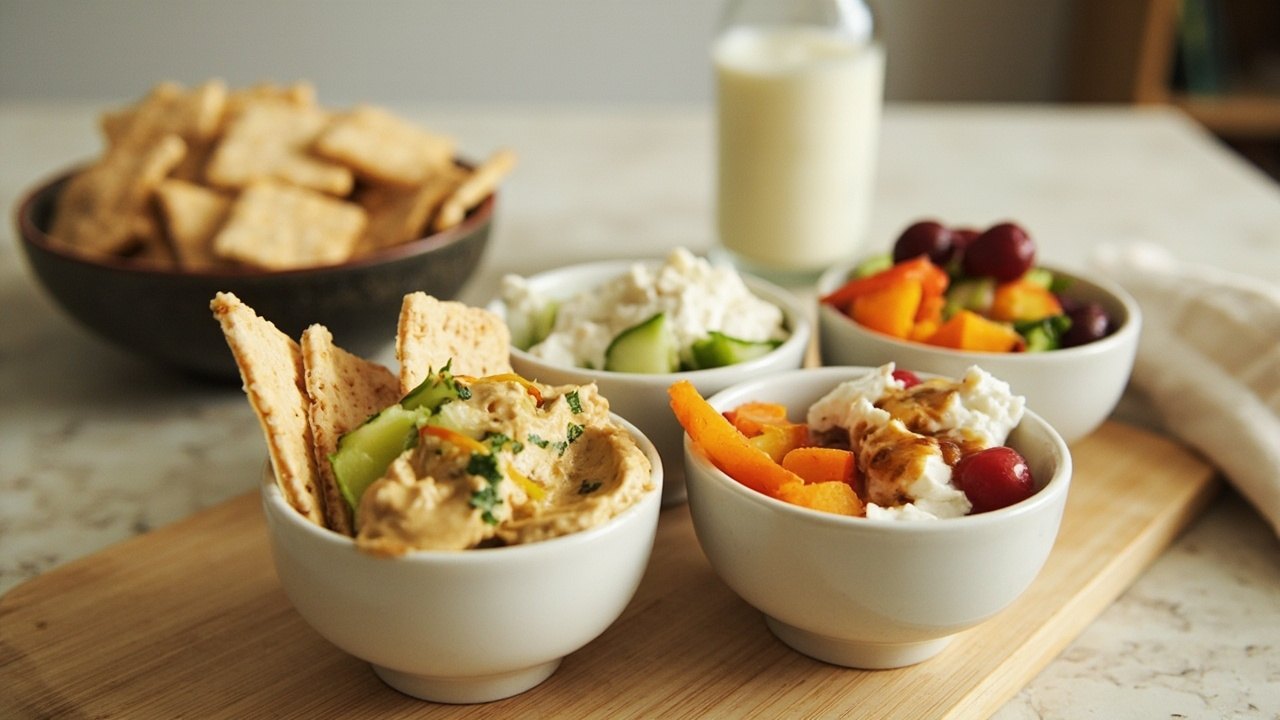
Afternoon snacks work best when they combine enough protein and fiber to feel satisfying, while still tasting enjoyable. These satisfying snack ideas are easy to assemble, many can be made ahead, and several are designed to eat comfortably at a desk without making a mess.
The short version
- Pair a protein-rich food with fruit, vegetables, nuts, or whole grains for staying power.
- Prepare larger batches of dips, snack boxes, and toppings so the next choice is ready to grab.
- Choose snacks that are easy to eat one-handed, especially when you are working between tasks.
Start With the Protein-and-Fiber Formula
A satisfying snack usually needs more than flavor alone. Pairing protein with fiber gives you a more balanced combination, while fresh fruit, vegetables, nuts, seeds, or whole grains add texture and variety.
Some easy combinations include apple slices with peanut butter, carrot sticks with hummus, or crackers with cheese and cucumber. Yogurt with berries and a sprinkle of seeds follows the same pattern, as does a small handful of nuts with dried fruit.
You do not need to follow a rigid formula or measure every ingredient. Think of each snack as having three parts: a protein source, a fiber-rich companion, and something that makes the pairing more appealing.
That final component might be a squeeze of lemon, a spoonful of salsa, a drizzle of honey, or a pinch of herbs. These small additions can keep a familiar snack from tasting repetitive and make it feel more intentional.
Make-Ahead Savory Snacks for Sagging Afternoons
Preparing savory snacks in advance is one of the easiest ways to avoid reaching for whatever is closest when hunger arrives. Store components separately when possible, then combine them just before eating.
A simple hummus tray can include hummus, baby carrots, cucumber slices, bell peppers, cherry tomatoes, and a few whole-grain crackers. Keep the vegetables chilled and the hummus covered, and add the crackers shortly before serving so they stay crisp.
You can also make a flexible snack board with cheese cubes, olives, nuts, apple slices, and whole-grain crackers. Arrange the ingredients in small portions rather than creating one large platter; this makes grabbing a serving easier and helps keep the portions manageable.
For another make-ahead option, prepare a batch of roasted chickpeas or edamame. Once cooled, season them with olive oil, garlic, smoked paprika, or your preferred spice blend. Keep them in an airtight container and let them return to room temperature before eating if you prefer them warm.
- Choose two or three snack components with different textures.
- Prepare and season the components in separate containers.
- Store the most delicate items, such as lettuce or cut fruit, on top.
- Pack only the amount you expect to eat that day.
Edamame can also work as the main part of a snack box with nuts, dried fruit, and a small serving of dark chocolate. The variety keeps the meal interesting without requiring complicated cooking.
Desk-Friendly Picks That Are Easy to Eat
Desk snacks need to be tidy, portable, and comfortable to eat without a knife and fork. Choose foods that can be picked up one-handed and do not create crumbs, grease, or strong odors.
Good options include trail mix, protein bars, roasted nuts, whole-grain crackers with cheese, or small pieces of fruit with nut butter. Yogurt in a cup with a spoon is another straightforward choice, especially if you add the toppings yourself.
For a fresh option, try sliced apples with peanut butter, banana pieces with peanut butter, or cucumber with a small pot of hummus. Put the dip in a separate container and dip as you eat, keeping the keyboard and papers clean.
Small sandwiches can also work well. Cut them into finger-sized pieces, use fillings that are easy to manage, and wrap them so they do not dry out. A filling of turkey or chicken with cheese and lettuce is familiar, while hummus with tomato and cucumber offers a meat-free alternative.
Save strongly fragrant foods for lunch away from your desk. Snacking should provide a useful break rather than leave you distracted by lingering odors. Keep a water bottle nearby, and choose a fresh mint or mild fruit if you like something extra after your snack.
Sweet Snacks That Still Feel Balanced
Sweet snacks can fit comfortably into an afternoon routine when they are built around protein, fiber, and satisfying texture. Fruit is a useful base because it adds sweetness, freshness, and fiber without requiring a complicated recipe.
Try yogurt with berries, chia seeds, and a small spoonful of nut butter. The toppings can be packed separately for a fresher texture. Another combination is sliced banana with peanut butter and a sprinkle of oats, which becomes more filling than fruit alone.
For a portable option, prepare overnight oats with rolled oats, milk or yogurt, chia seeds, and chopped fruit. Refrigerate the mixture overnight, then add a crunchy topping just before eating. You can also prepare individual jars so each afternoon snack is already portioned.
Baked goods can be part of the plan too. Make a batch of banana oat bites or small oat cookies, let them cool completely, and store them in an airtight container. Pair one or two with fruit or yogurt for a more complete snack.
- Apple slices with almond butter and a few crushed nuts
- Yogurt with peaches, raspberries, or another seasonal fruit
- Whole-grain toast with peanut butter and a thin layer of jam
- Dark chocolate with walnuts and dried apricots
- Oat bites with a small handful of fresh berries
The key is to make the sweet component one part of the snack rather than the entire snack. That gives your plate more variety and can make the treat feel more satisfying.
Build Snack Boxes for the Week
Snack boxes are useful because they turn a collection of ingredients into several ready-to-eat combinations. They also make it easier to try new foods without committing to a large recipe or buying a large quantity of one ingredient.
Choose a theme for each box: a fruit-and-nut box, a savory box, a yogurt-and-topping box, or a mixed box with several small portions. A mixed box might contain trail mix, cheese sticks, apple slices, whole-grain crackers, and a small chocolate square.
Preparing several boxes at once takes a little planning, but the work is straightforward. Wash and cut fruit, portion nuts, measure crackers, and place everything in separate small containers or divided lunch boxes. Add a small napkin or fork if any item needs one.
For a varied week, rotate the textures and flavors rather than repeating the same ingredients. A Monday box might feature apple, cheddar, and almonds, while another features pear slices, walnuts, dark chocolate, and crispbread.
Most snack components keep well for several days when properly covered, though some foods are best when prepared more recently. Check the texture and smell of ingredients before serving, especially with cut fruit, nuts, crackers, and dips.
Keep one backup option that requires no preparation, such as shelf-stable yogurt, canned fish, nut butter, or packaged nuts. Having a fallback can be especially helpful on a busy day when even a few minutes of chopping feels like too much.
Flavor Boosters for Simple Snacks
Basic ingredients become more appealing when you adjust the seasoning or add a contrasting texture. This is especially useful when you want a snack to feel special without adding a long list of ingredients.
Try adding flaky salt to roasted nuts, fresh herbs to hummus, or a little citrus zest to yogurt. Cinnamon can brighten apple slices, while mustard or chili paste can give roasted chickpeas a sharper flavor. Peppery leaves such as arugula can make a cheese-and-cracker plate feel fresher.
Mixing several textures also helps. A bowl of yogurt, fruit, and granola is more interesting than yogurt and fruit alone, and crackers become more satisfying with cheese, cucumber, or a spread. Keep the additions simple enough that you can prepare them in the same routine.
For stronger flavor, marinate or season foods in advance. Olives with herbs, roasted vegetables with garlic, and spiced nuts can all be prepared ahead. Just remember that strongly seasoned snacks may be less suitable for shared office spaces, so save those for a more private break.
How to Choose a Snack for Your Afternoon
Start by asking what kind of hunger you have. If you are tired and want something quick, choose a ready-to-eat combination such as yogurt, fruit, nuts, or crackers with cheese. If you have time for a little preparation, hummus with vegetables or overnight oats may fit better.
Consider what you have already eaten during the day. A snack after a vegetable-heavy lunch may be lighter and fruit-based, while one after a simple breakfast can be more substantial. There is no need to make the same choice every time; rotating snacks helps prevent boredom.
Think about the next meal, too. A lightly sweet snack can be a good bridge to dinner, while a filling savory combination may make a later meal feel less urgent. Choose what feels comfortable rather than trying to follow a strict schedule.
Finally, make the snack worth the pause. Put it on a plate, step away from your screen for a few minutes, or eat it with a drink of water. A snack break can restore your attention and make the rest of the afternoon feel more manageable.
Frequently asked questions
Can afternoon snacks help with energy?
A snack that includes protein, fiber, and carbohydrates can provide a more steady feeling of satisfaction than a sweet treat on its own. The right choice depends on your meals, your appetite, and how long you need the energy to last.
What can I make ahead for work?
Hummus with vegetables, snack boxes, overnight oats, roasted nuts, and fruit with nut butter are all convenient options. Store wet ingredients separately and keep delicate or crunchy items protected until you are ready to eat them.
What is a filling snack for the office?
Try pairing a protein source with fruit, vegetables, nuts, or whole grains. A small sandwich, yogurt cup, trail mix, or hummus with crackers is easy to eat without a plate, provided you pack the portions and any dips carefully.
With a few dependable combinations and a little preparation, afternoon snacking can become a satisfying part of the workday rather than an impulse decision. Keep your options varied, your portions practical, and your favorite flavor boosts close at hand.