How to Host a Relaxed Dinner Party Without the Stress
Create a welcoming evening with a thoughtful guest list, make-ahead menu, calm table, and a timeline that lets you enjoy your own dinner party.
The secret to a relaxed dinner party is deciding what can be done earlier, keeping the menu simple, and treating the evening as a gathering rather than a performance. A little planning before guests arrive will let you welcome everyone, share a meal, and spend more time at the table instead of monitoring the kitchen.
The short version
- Invite a manageable group and plan one clear, make-ahead menu.
- Set the table and gather serving tools before your guests arrive.
- Use a simple timeline so dinner stays on track without feeling rushed.
Start With the Guest List
Begin by choosing guests who will feel comfortable together. A relaxed dinner works best when the group is small enough for one table and the conversation can include everyone. Six to eight people is often comfortable for an intimate evening, though the right number depends on your table, your home, and how much food you want to prepare.
Before sending invitations, consider a few practical details. Will there be someone who needs step-free access? Do any guests have dietary restrictions you should know about? Is the evening meant to be casual, or would a slightly more polished setting suit the group?
Ask directly about allergies and dietary needs without making the invitation feel clinical. A simple message such as, “Let me know if you have any dietary needs,” gives guests an easy way to respond. You do not need to create an elaborate menu with endless substitutions; choose a main dish that can be adjusted for a small number of guests.
Next, decide what the evening should feel like. A shared dinner, a few appetizers, and dessert after the meal may be more relaxed than a formal sequence of courses. Let guests know whether you are serving wine, offering one drink, or keeping the evening alcohol-free. Clear expectations reduce last-minute questions and make it easier for everyone to settle in.
Build a Simple Make-Ahead Menu
A useful dinner-party menu has one main event and a few supporting dishes that can be prepared ahead. This is where simplicity becomes a form of hospitality: your guests do not need several complicated dishes to feel cared for, and you avoid juggling too many pans while trying to enjoy the evening.
Consider this structure:
- To begin: A bowl of olives, roasted nuts, cheese, crisp bread, or a simple seasonal salad.
- For dinner: One substantial dish, such as roasted chicken, baked pasta, or a grain bowl with roasted vegetables.
- Alongside: Two easy extras, such as a green salad, warm bread, or a tray of roasted vegetables.
- For dessert: Fruit with ice cream, a store-bought cake, or a pudding made the day before.
Choose dishes you genuinely know how to cook. Familiar food is often more reliable than a recipe that demands rare ingredients or several unfamiliar techniques. It also lets you shop with a short, focused list instead of making repeated trips to the store.
A menu that gives you breathing room
Roasted chicken with vegetables, a mixed green salad, bread, and a fruit dessert is easy to manage. The chicken and vegetables can share an oven, the salad can be dressed shortly before serving, and dessert can be ready in advance. If you prefer a cooler meal, a large pasta salad, simple soup, and sliced vegetables can all be prepared ahead and served comfortably.
Keep one task flexible. You might plan to sauté vegetables while the main dish rests, but you can also serve them room temperature if everyone is enjoying a drink at the table. Your timeline should have checkpoints, not a rigid schedule for every minute.
Label dishes if they need refrigeration, and avoid leaving perishable food out longer than is safe. Refrigerate ingredients promptly, take out only what you need, and clean as you go. A clear counter space is more valuable during dinner than a complicated arrangement of serving platters.
Set the Table Before the Doorbell Rings
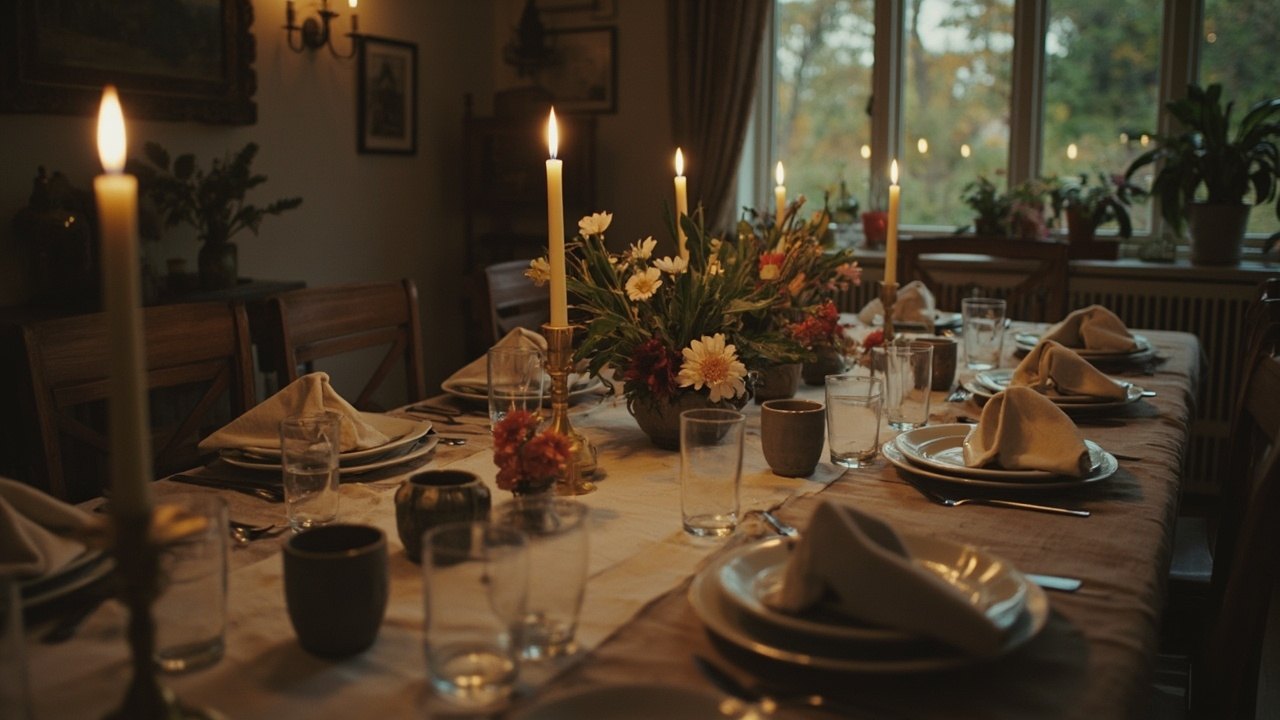
Complete as much of the table setting as possible earlier in the day. You do not need matching china, elaborate centerpieces, or perfectly folded napkins. A table looks inviting when it has some texture and a few personal details.
Use tablecloths or placemats that you already own, ordinary dinner plates, and whatever glassware suits the menu. For a relaxed setting, mismatched pieces can work well as long as they are clean and sturdy. Place serving forks and spoons together, and set any dishes that will stay on the table directly beside each guest’s plate.
Keep the centerpiece low so people can see one another. A small bowl of fruit, a few branches in a vase, or even a candle is enough. Choose a warm light if the room begins to feel dim, but avoid lighting that is so bright it makes the evening feel formal.
Prepare a small tray for items that guests may need. It might hold extra napkins, serving utensils, a corkscrew, bread, salt, and pepper. Put it within reach, but away from the guest chairs. This prevents small requests from pulling you away from the table during the first course.
Use a Calm Timeline for the Day
A simple timeline helps you cook without filling the hours before dinner with nervous checking. Adjust it to suit the meal, but keep the sequence straightforward.
- The day before: Buy nonperishable items, make dessert if you wish, and set out serving dishes and utensils.
- The morning of the gathering: Prepare the main dish or components that benefit from earlier cooking. Clear a place in the refrigerator for anything that must wait.
- A few hours before guests arrive: Finish cooking, dress the salad, and arrange the table. Chill drinks and keep perishable ingredients refrigerated.
- Thirty minutes before arrival: Set out the appetizer, light candles, freshen the bathroom, and check that music is at a comfortable level.
- When guests arrive: Offer a drink, serve the first course, and allow the kitchen to pause until the main dish needs attention.
- Near the end of dinner: Clear unnecessary plates, serve dessert, and move used serving dishes to the sink rather than trying to clean them fully.
Do not try to complete every task at the exact moment listed. The timeline is a guide, not a test. If the main dish needs another few minutes, move the bread or salad forward. If something finishes early, let it rest. A relaxed host can adapt the sequence without anyone noticing the change.
Keep the Atmosphere Easygoing
Your own behavior sets the tone. Stay near the table after guests arrive, rather than disappearing into the kitchen, and let the food wait a few minutes if conversation is flowing. Dinner is not successful because every plate appears at precisely the same moment; it succeeds when people feel welcome and unhurried.
Start with light conversation and avoid forcing a topic onto the group. It is fine to ask an open question, then let the answer develop. With a smaller group, invite everyone to speak rather than taking over every silence. With a larger group, seating people with varied interests can make conversation easier.
Choose music that supports the room without demanding attention. A familiar playlist at a low volume is ideal. Keep the volume consistent so it does not become louder during conversation, and adjust the lighting as the evening changes.
Let guests help in small ways if they offer. Some people enjoy passing plates, opening wine, or clearing used dishes, while others would rather stay seated. Do not assign tasks unless it feels natural. Saying, “Would anyone like to help me pass the salad?” is more relaxed than expecting guests to follow instructions.
Make Clean-Up the Easy Part
You can reduce the post-party workload by cleaning in stages instead of waiting until everyone has left. During the appetizer, wipe down counters and rinse serving tools. Once the main course is served, move empty pans and packaging out of sight. After dessert, ask for help with plates and glasses if the group is comfortable doing so.
Keep a bus tub or large bowl near the sink for used items. Scrape food into the bin, stack dishes by type, and load the dishwasher as space allows. Wipe the stovetop and table while the food is still fresh enough to clean easily.
Save delicate glassware, pans that need soaking, and the bathroom for after guests leave. Put leftovers into clear containers and refrigerate them promptly. A short cleanup routine will leave your kitchen in good shape without turning the end of the evening into another project.
Frequently asked questions
How many people should I invite for a relaxed dinner party?
Choose a number that fits your table and your energy. Fewer guests usually mean easier seating, simpler preparation, and more room for conversation. If your table is especially large, you can invite more people, but keep the menu generous enough that the table does not look sparse.
What should I serve when I am not an experienced cook?
Serve food you have made before and limit the number of dishes. A roast, a tray of vegetables, a salad, and a prepared dessert provide a complete meal with little last-minute work. Familiar recipes also make it easier to judge timing and fix a problem if something is not ready when planned.
Should I clean the kitchen while guests are there?
Do only quick tasks that help you stay organized, such as rinsing pans or wiping the counter. Constant cleaning can make you seem distracted and keep you away from the table. After guests leave, tackle the larger cleanup in stages, beginning with food and dishes before moving on to washing and storage.
Hosting calmly is not about making everything perfect. It is about preparing thoughtfully, accepting that dinner will move at its own pace, and giving your guests—and yourself—room to enjoy the evening.