Clever Storage Ideas That Make Small Apartments Feel Bigger
Discover renter-friendly ways to use walls, beds, doors, corners, and multipurpose furniture without crowding your home.
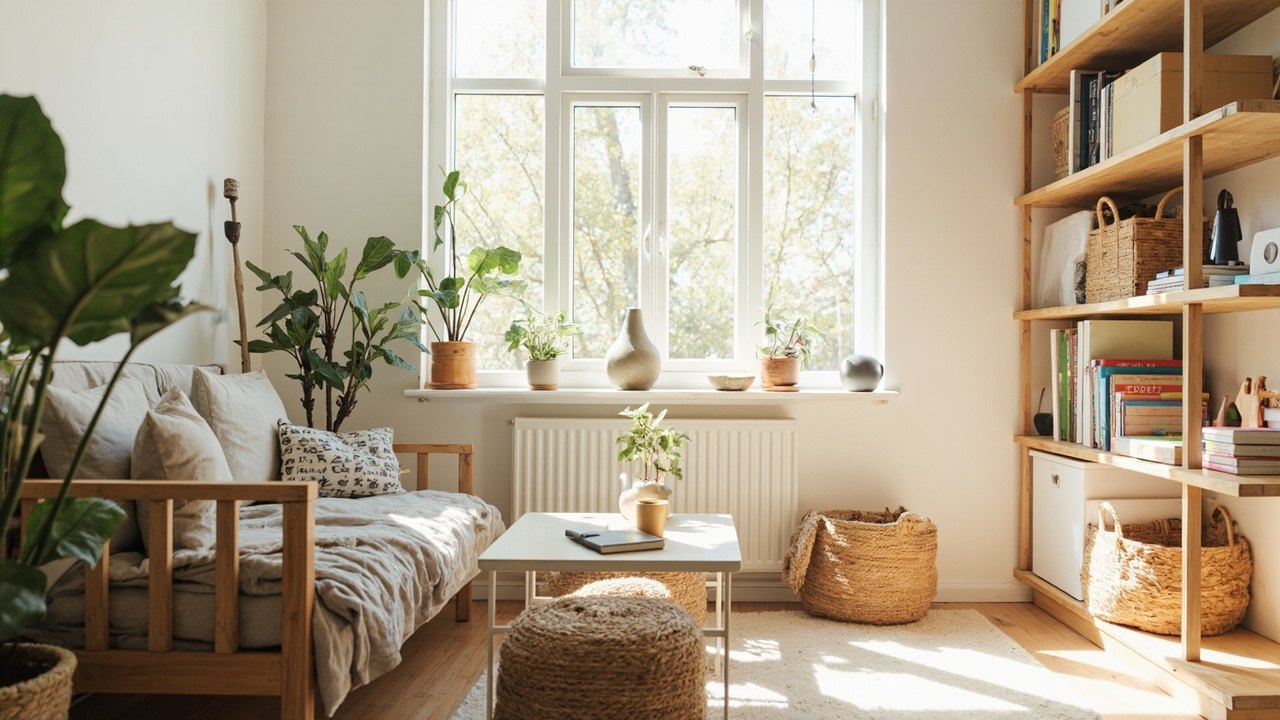
Clever storage can give a small apartment more room to breathe without making it feel like a crowded warehouse. The best ideas use overlooked surfaces, combine familiar functions, and make everyday items easier to reach.
The short version
- Use vertical space and shallow storage for items you rarely touch.
- Choose movable, renter-friendly solutions instead of permanent alterations.
- Give every category a home and reset the spaces that get messy fastest.
Turn Walls and Corners Into Useful Storage
Before buying organizers, look for surfaces that do not interfere with walking, sleeping, cooking, or working. A blank stretch of wall beside a sofa or above a desk can hold floating shelves, peg rails, narrow cabinets, or rows of hooks. Keep the lower level open so the room still feels spacious.
Measure the available wall and the depth of the items you plan to store. Shallow shelves are especially useful in apartments because they hold books, dishes, baskets, and small appliances without projecting far into the room. Use the same color family across containers and shelves to create a calm, continuous look.
Corners often become dumping zones for objects that have nowhere else to go. A slim shelving unit, a wall-mounted ledge, or a stackable basket can turn an awkward angle into a defined home. In an entry area, for instance, place a narrow unit for shoes and a small tray for keys. In a bedroom, use the corner beside a dresser for folded clothing or a hamper.
For renters, adhesive hooks and removable mounting systems offer more flexibility than drilled shelves. Follow the product instructions, test the surface first, and avoid placing heavy items on unsupported adhesive pieces. Command strips can work for light, frequently used objects, while genuinely heavy loads are better suited to furniture that reaches the floor.
Make the Space Under Your Bed Work Harder
Under-bed storage is one of the most valuable areas in a small bedroom because it is often wide, low, and unused. Low rolling bins are the simplest option. Slide them in from the side and label the front so you do not have to pull out several boxes to find one item.
Choose containers according to what they will hold. Breathable fabric baskets suit seasonal clothing and linens, while lidded plastic bins protect papers, electronics, or dusty extras from pests. Keep the heaviest boxes directly over the bed’s support frame, where the weight is better supported. Leave the center and head area clear if the storage setup would otherwise make the bed uncomfortable.
Some beds come with built-in drawers, while others can be raised on sturdy blocks to create a larger cavity. If you add risers, check the bed’s stability and make sure every support has a secure footing. Do not use tall risers that prevent you from sitting comfortably on the edge of the mattress.
Under-bed space is ideal for things you need occasionally, not things you use every day. A practical sorting system is:
- Put everyday linens in the most accessible bin.
- Store seasonal clothes together in labeled containers.
- Keep travel gear or spare towels in another box.
- Discard anything you have not needed and do not want to keep.
The same approach works in a studio apartment, where a bed platform can provide storage for household supplies as well as clothing.
Use the Back of Doors Without Blocking Them
An over-door organizer can turn a plain door into a shallow storage cabinet. Look for a unit with several pockets or shelves and enough clearance for the door to open normally. This is especially helpful in bathrooms, entryways, and bedrooms, where wall space may be limited.
Use the pockets by category rather than filling them with miscellaneous objects. Hang cleaning supplies in one area, hair products in another, and accessories in a third. If the door carries these items frequently, put the most-used supplies in the pockets closest to the center so they are easy to reach.
Door-mounted racks and hooks can also hold hats, light scarves, jewelry, towels, or cleaning tools. Keep the load light and balanced. Tall items may interfere with a nearby shelf, and hooks installed near the top of the door can pull against the frame when the door opens fully.
Check the organizer before drilling any hooks, since it may already include mounting hardware. For a rental, removable strips or hook products can be useful, but they are better for light items. Test any adhesive on a discreet section of the door and allow the recommended setting time before hanging anything.
Choose Furniture That Stores While It Serves
Multi-use furniture is the most flexible way to add storage without adding more objects to the room. A storage bench can provide a place to sit, a surface for setting down a bag, and a compartment for shoes or blankets. A lift-top coffee table can conceal remotes, chargers, and board games while functioning as a table between meals.
Other useful combinations include a dining table with a lower shelf, a console table with drawers, a bed frame with built-in storage, and a nightstand with a closed cabinet. The key is to choose pieces that support your real routines. A beautiful cabinet will not solve a storage problem if it is too deep for the room or too delicate for the items you need to store.
Measure furniture before it arrives, including the space needed to open drawers and doors. In tight rooms, sliding or pull-out storage can be easier than wide-swinging pieces. If two chairs can tuck beneath a table when guests are not present, consider a small table with a lower shelf rather than a larger one with no storage.
Foldable or nesting pieces can make storage appear when needed and disappear afterward. A luggage rack can hold a suitcase, a folding screen can divide a room and display towels, and a stack of nesting stools can provide flexible seating around a table. These pieces are especially useful in apartments that double as offices or guest rooms.
Create Zones for the Mess That Builds Up
Small apartments feel calmer when every object has a designated place. Instead of organizing by type alone, organize by activity. Create a drop zone near the door for keys, mail, and bags. Give the kitchen one home for cooking tools, another for pantry goods, and a small landing area for items that need to be put away.
A daily reset takes only a few minutes and prevents clutter from spreading. Start with the surfaces you see first: the kitchen counter, coffee table, bathroom sink, and entry table. Return each item to its category or discard what no longer belongs there. Wipe the surface before placing things back so the reset includes both order and care.
Try a weekly round for deeper areas. Check one drawer, one shelf, and one container at a time rather than attempting to reorganize the entire apartment. This approach makes the work manageable and lets you notice which storage solutions are not working before buying replacements.
Limit visible containers to those you use often. Decorative baskets are useful, but an open basket on every shelf quickly makes the room look busy. Closed bins can hide visual noise, while attractive lidded boxes can double as display pieces when they are neatly arranged. Keep labels readable and consistent so the system remains understandable to everyone who shares the home.
Build a Renter-Friendly Storage Toolkit
Removable storage is the safest choice when you cannot paint, drill, or alter permanent surfaces. A useful toolkit includes adhesive hooks, tension rods, over-door racks, slim rolling carts, fabric bins, and furniture with built-in compartments. These options can move with you when you change homes.
Before adding another organizer, edit what you already own. Empty a closet shelf, then place the items you use most often at eye level. Move rarely used pieces to the top or into labeled bins. Use your existing baskets and boxes rather than buying nearly identical containers in several sizes.
Protect rented walls by following mounting instructions and removing products carefully when moving out. Avoid relying on adhesive products for unstable, valuable, or heavy items. If a feature cannot be removed without leaving marks, consider a freestanding solution that leans against the wall or fits under existing furniture.
For the greatest flexibility, think in layers: open shelves for attractive everyday objects, closed storage for visual clutter, and movable bins for items that change with the season. A layered system is easier to adjust as your habits and your home change.
Frequently asked questions
What is the best storage for a very small apartment?
The best storage is usually a combination of vertical shelving, closed multipurpose furniture, and containers that fit under or beside existing pieces. Start with one high-use zone rather than trying to organize every corner at once.
How can I add storage without drilling holes?
Removable hooks, over-door organizers, tension rods, adhesive mounts, rolling bins, and storage furniture can all help. Use adhesive products only within their stated weight limits, and test an inconspicuous area first.
How do I keep small-apartment storage from looking cluttered?
Keep daily items visible and everything else contained. Use coordinated containers, leave some open space on each shelf, and remove anything that has no clear purpose or does not have a designated home.
With a few well-placed solutions and a simple daily reset, your apartment can hold more without looking crowded. The smartest storage is not merely hidden; it makes the objects you use every day easier to find and the rooms around them easier to enjoy.